
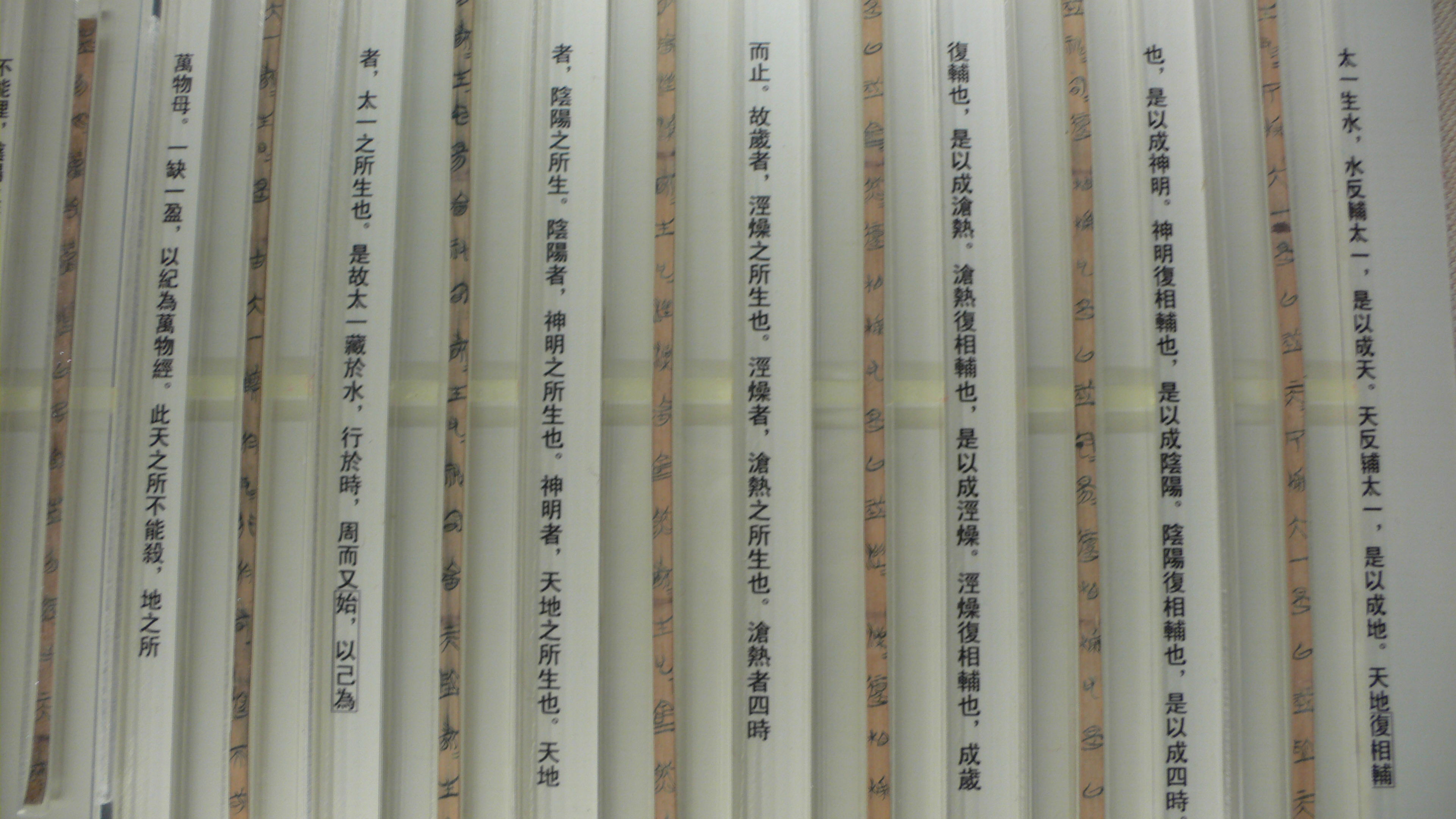
Near a river in Guodian, China, not far from a farmhouse made of earth and thatched with straw, Chinese archaeologists in 1993 discovered a tomb dating back to the fourth century B.C…..
[…]
For years scholars believed that Confucians were little concerned with human emotions. But in the Guodian texts, the element “xin,” – a pictographic image of the human heart – appears over and over again as part of several Chinese characters. It’s a startling display, both philologically, in terms of understanding the evolution of Chinese characters, and philosophically. “These texts conclusively show that emotions or feelings as we understand them today were major philosophical concerns,” Tu says. The Guodian texts offer detailed descriptions of a range of human emotions. They also extensively explore the relation between heart, mind, and human nature; between the inner self and the outer world; and whether human nature is good or evil – a cumulative emphasis on the inner dimensions of man that most scholars formerly believed came much later in Chinese intellectual history.
[…]
The genealogy of Chinese intellectual thought is now undergoing revision and Taoist and Confucian texts are being reinterpreted. And because Taoism and Confucianism are very much “living traditions” in China, these slender bamboo strips have the potential to transform daily living. “These are not simply philosophical ideas; they have broad implications for practical living, for the development of polity and society,” says Tu.
Some of the Taoist Guodian texts offer a whole new cosmology – a view of the creation of the universe with elements not even mentioned in later versions of the Tao Te Ching: the creation of water, the existence of four seasons, the birth of heaven and earth after other events have taken place. The bamboo slips themselves are having a similar effect on the Chinese intellectual universe.
—From Ancient script rewrites history: ‘This is like the discovery of the Dead Sea Scrolls’ By Andrea Shen
 One Seeker's Story